Delivering prices at Kroger
- Defined approach & led user research to surface the most impactful improvement opportunities within the domain
- Coordinated project team and various SME to map the current state systems, stakeholders, & business processes
- Proposed a prioritized plan of attack for when and why the domain should work the many opportunities identified
Impacts
- Fueled the domain's roadmap for the next several quarters
- Reduced time to onboard for new members within this space
- Connected the main business priority of affordability to the Merchandising teams & Store associates that impact price perception for Customers
Summary
Product, Design, and Engineering leadership need to discover what the Price Delivery process is, because "today, there are piecemeal understandings of it." They want to understand the space better by "identifying areas of opportunity for future innovation", starting with the most common flow.
The real ask from Product was to know what systems are involved in delivering price today and the data that is passed between said systems.
One of the main concerns that triggered this work was how little leadership knew of this domain since a recent re-org plopped this space onto their lap. With a new CEO coming onboard who very much cares about price in the retail space, they needed to quickly understand what this domain actually does for the org and where they should focus their time immediately.
What is Price Delivery?
Price Delivery is the means by which prices are made available to the customer shopping at the store & online. Price Delivery ensures pricing intent matches what the customer will pay for the items in their cart.
“...pricing decisions don’t matter unless they are delivered correctly, everywhere, and on time.” -Engineering Lead
“Without our price delivery applications, transactions would not be possible.” -Product Manager
Given the scope of the project was on the most common flow: it made sense to ask, is this all of Price Delivery? The team knew this certainly wasn't all of it, but they didn't understand to what extent.
So rather than just focus on a very small landmark in the potentially large landscape of Price Delivery, my lens in which I was viewing this work grew to see things from a higher vantage point.
Making sense of this large domain
The Price Delivery domain consisted of several members who had 10+ years of expertise in this subject matter, whereas the majority had only been in this area for 1-3 years and documentation wasn't a huge priority, as my project team self-attested.
Because documentation was infrequent, out-of-date, and often scattered across many tools, I began identifying the systems, people, and processes involved. In other projects this might be seen as table stakes, but in this context, knowing the boundaries of Price Delivery while admitting we can't boil the ocean was completely necessary.
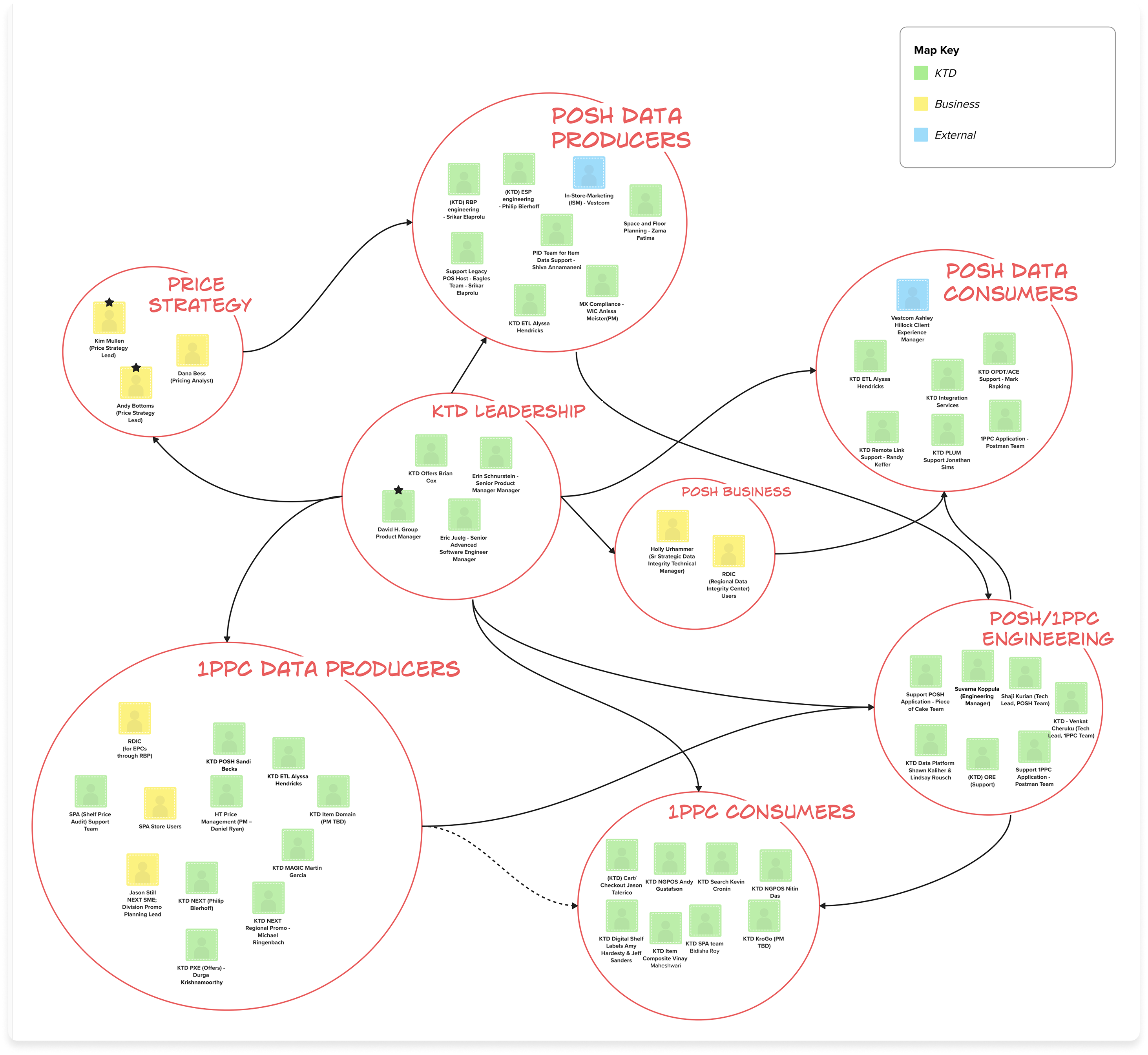
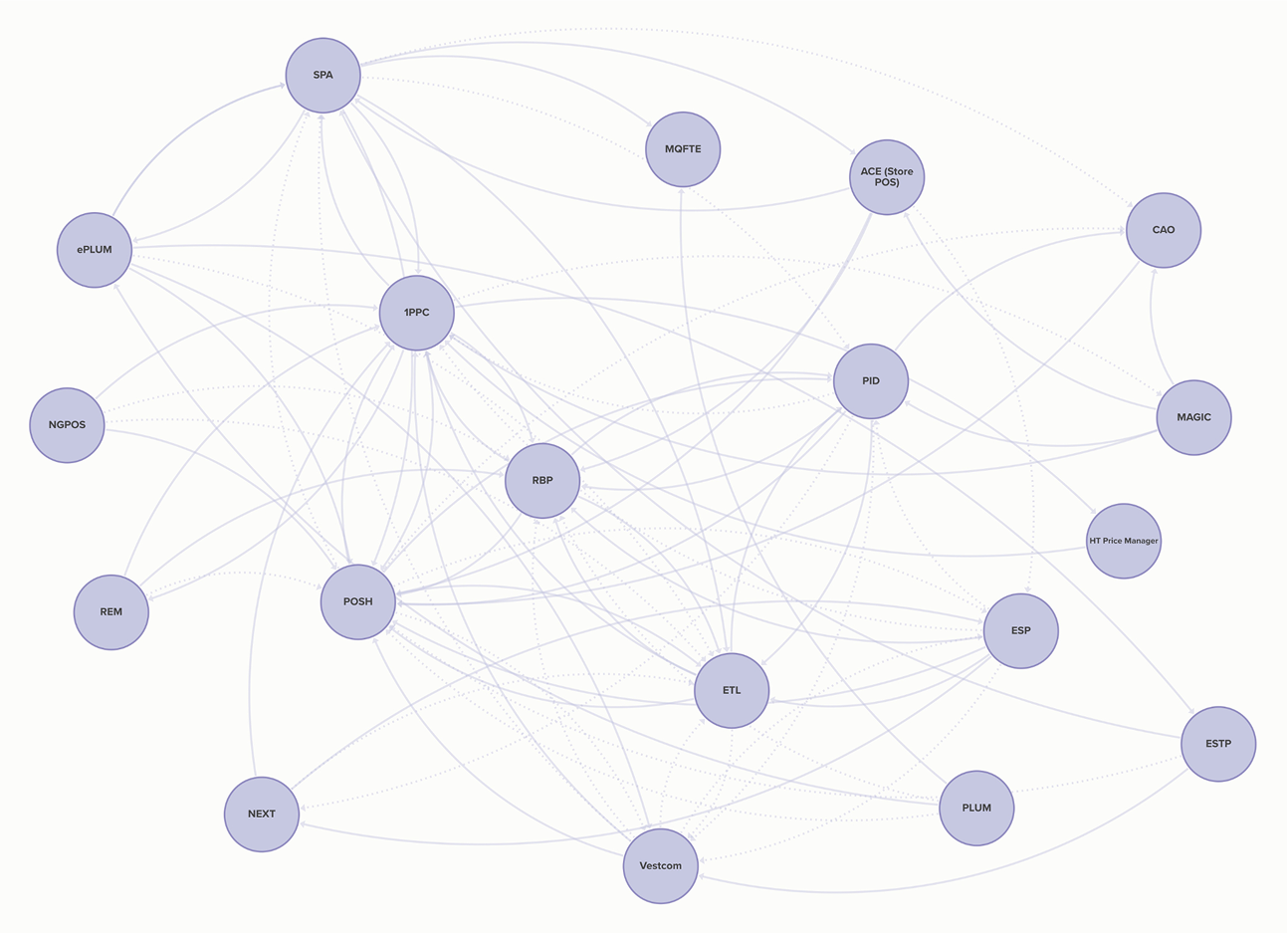
Starting with the project team, we mapped who is involved or engaged in Price Delivery from their immediate understanding. We then prioritized the stakeholders & users that best reflect the project's scope and what their jobs within Price Delivery were. Lastly, I worked with them to identify all the systems used for Price Delivery purposes.
Where we had questions or were uncertain of any gaps, I did desk research to give us good enough answers in order to make progress. And when I learned that RDIC members were the primary users, I interviewed the team's lead and several of her direct reports to get a firmer sense of how they impact and influence Price Delivery.
It became apparent through the research that certain Store Associates called Price Integrity Clerks were just as essential to delivering accurate prices as the RDIC team was. They periodically check for price discrepancies on items in the store and escalate pricing issues to the RDIC team when they are unable to fix it themselves. The RDIC team has the sole responsibility & power to force price changes in certain systems upstream when they are informed by store members or other associates. When it comes to Price Delivery, both teams are able to generate tags to correct pricing issues.
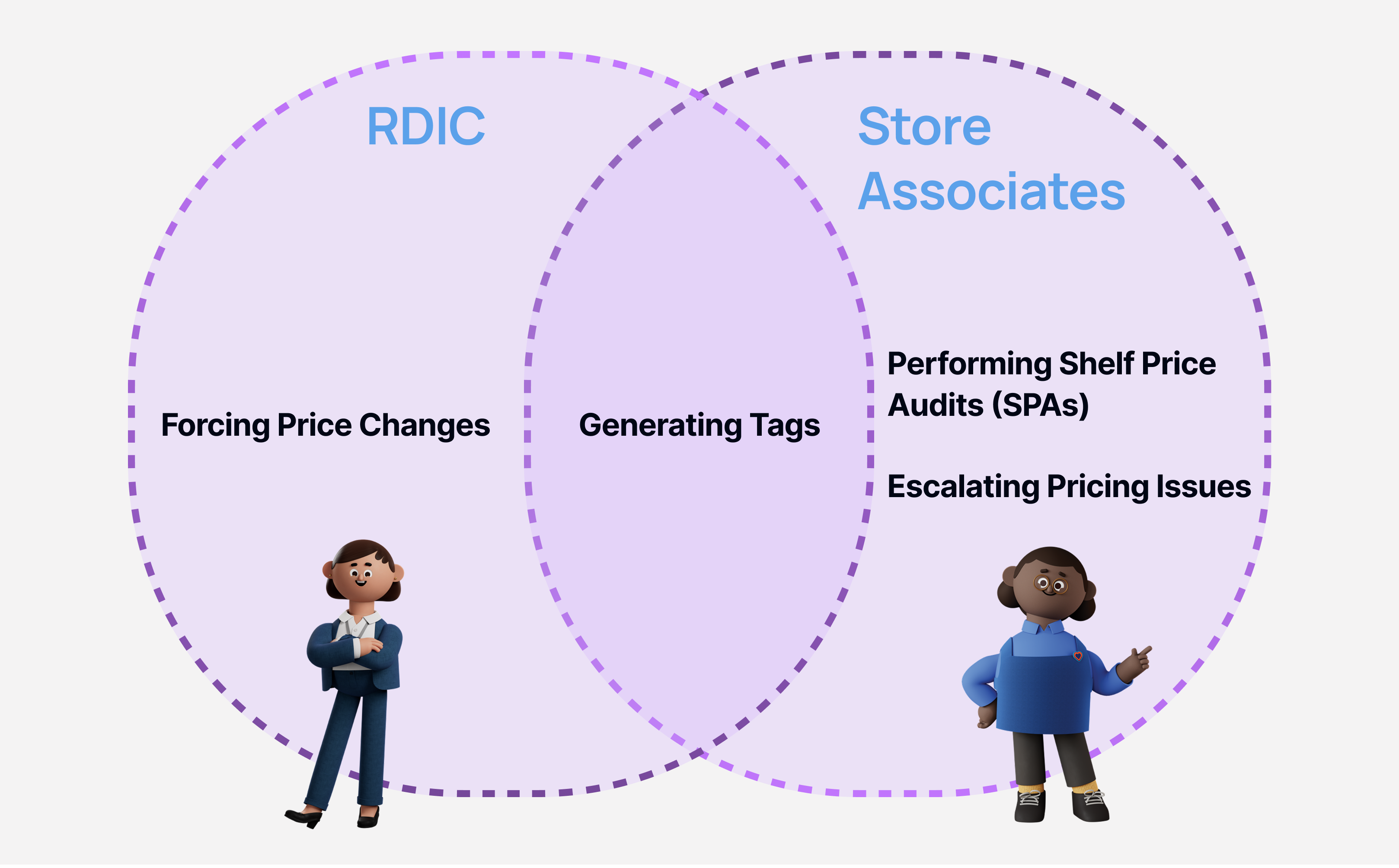
Important note: because these Store Associate roles technically fall under the purview of an entirely different team within the company, this Price Delivery domain hadn't spent any time learning about how they impact price delivery.
And who is on the receiving end of all the Price Delivery work? The Customers! They are the ones this domain needs to consider & design for what happens in their minds and subsequent habits when pricing issues crop up while they shop consistently. Customers don't see all the behind-the-scenes stuff that the Price Delivery domain is working on, but they reap the effects of them daily: whether that's positive, negative, or somewhere in between.
Sadly, because Customers are so far downstream of this Merchandising domain, they are often neglected because the domain was measuring and tracking inconsequential and irrelevant KPIs to their actual shopping experience.
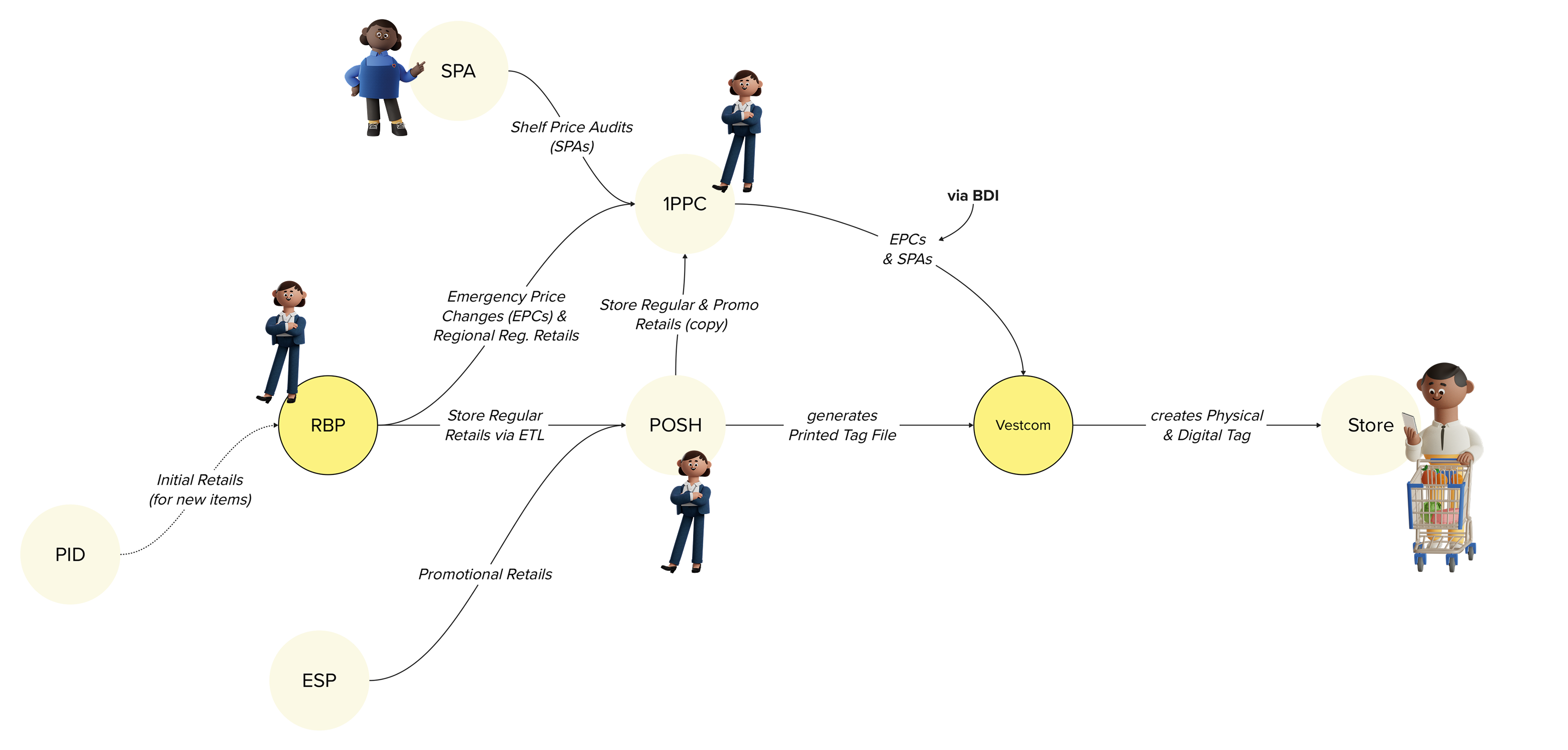
instrumental to delivering prices
Influencing where the team goes from here
Along with providing a list of opportunities & recommendations/next steps for each user segment, I highlighted several overarching themes too:
- Measuring system performance and usage is insufficient - the Price Delivery domain currently lacks the awareness and urgency to measure the RDIC, Store Associate, and Customer experience: which in turn affects price perception, affordability, & customer loyalty.
- If all goes well, the Price Delivery process occurs without human intervention or steps - because Price Delivery is not always reliable from pricing intent to the customer's purchase, internal Kroger roles have to get involved to triage and correct these mishaps that ultimately harm the shopper's experience
- Current pricing systems are inept at surfacing human errors - instead of finding ways to add friction or thoughtful hurdles to a Pricing Analyst's main task in setting prices on items, the domains responsible have removed a lot of friction and unknowingly harmed the downstream systems and users
Reach out if you'd like to learn more about this case study.